Coogee Media
HISTORY | STORIES | BEYOND BLOG & CREATE PEOPLE |
|
Streeton, Condor and Roberts
|
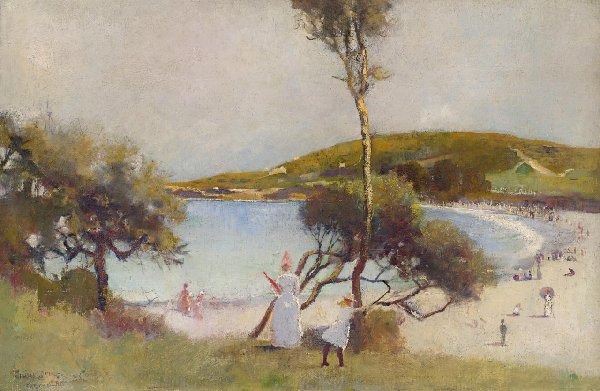 Charles Conder's painting of Coogee Beach |
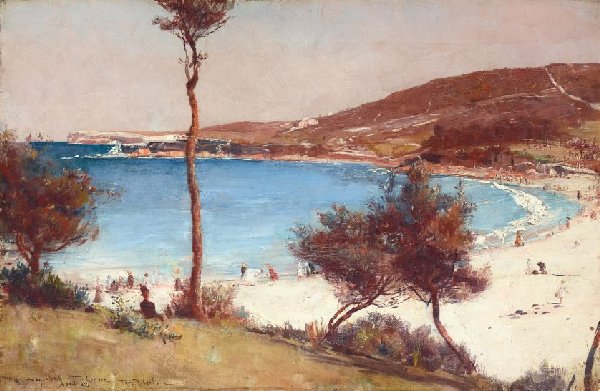 Tom Robert's painting of Coogee Beach |
"What a lovely little place. Sand, bananas, empty bottles & color and pretty children. Shall do some good work here I think'. So said Arthur Streeton, later Sir Arthur, (8 April 1867 - 1 September 1943) probably Australia's most celebrated artist when he wrote to Tom Roberts in September 1890. Coogee was his first plein air painting site. He stood near the same spot as his friends and colleagues Conder and Roberts to paint "Sunny South - Coogee".
Streeton liked Coogee very much and would return again and again when he visited NSW from 1890 to 1896, and then many years later. There are many other examples of his artistic interpretations of Coogee. He liked Coogee so much that he bought a house for his parents, Charles Henry and Mary (nee Johnson) Streeton at 134 Carrington Road, their home until his father died there at 102 in 1930. The was rebuilt in about 1950 and this was in turn recently demolished and replaced with a modern apartment building. His parents are both buried at Randwick General Cemetery at South Coogee.
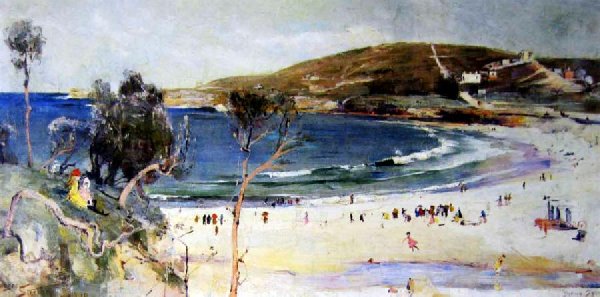
Arthur Streeton's version of Coogee Beach from north end
![Coogee Baths, [Wylie Baths] 1907 by Arthur Streeton](streeton1.jpg)
Coogee Baths [Wylies Baths] , 1907 by Arthur Streeton
The three artists met and painted together often towards the end of the 19th century, influencing each others' work and building a close bond of friendship. One intriguing question is "Where did they stay when they painted at Coogee?" Perhaps they lodged at Baden Baden Hotel adjacent to what is now Dunningham Reserve and at the time run by the publican and artist Louis Frank, who also painted views of Coogee. It would be interesting to know if they met and discussed art? Louis Frank's work, though, tends to have a more European perspective, lacking the intensity of light displayed in the work of the three Impressionists.
Streeton, Roberts and Condor saw the Australian light as something radically different from Europe - sharper, harsher, more revealing and worked to capture it with a devotion that helped define Australian Impressionism.
The Impressionists' Seat Sculpture
The Heidelberg School
References
Copyright © Coogee Media All rights reserved
| CONTACT US | ABOUT US |
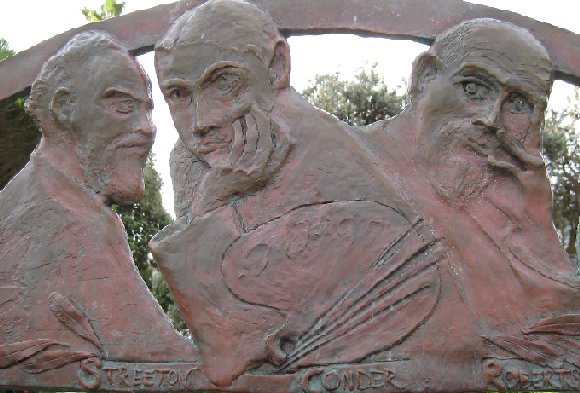
A bronze sculpture was created by local artist Eileen Slarke in 2005 to commemorate the work of the three Impressionists at Coogee. It bears portraits of the three artists and sits high off
the ground, but passerbys often take the opportunity to climb up on it and take in the view, much like it was in the late 19th century when painted by Conder, Roberts and Streeton. It was
unveiled by the Mayor of Randwick on 5th April 2009.

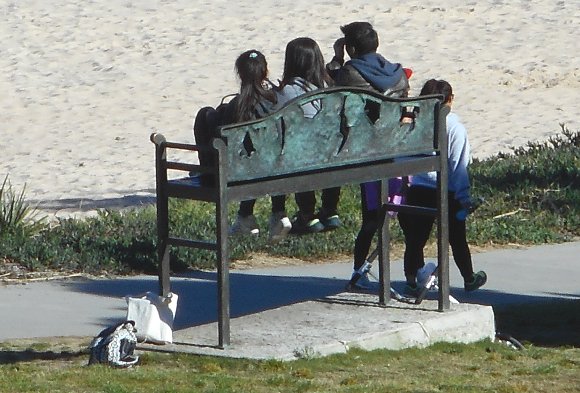

The three artists, together with Walter Withers and Frederick McCubbin were key figures in Heidelberg School. Drawing on naturalist and impressionist ideas, they sought to capture Australian life,
the bush, and the harsh sunlight that typifies the country. Painting Australian themes and scenes,
such as Coogee Beach, appealed to the growing nationalism that emerged in the late 19th century Australia. They have strongly influenced how Australians "see" the country and their influence
goes beyond art and has been incorporated into Australian literature, film and photography.