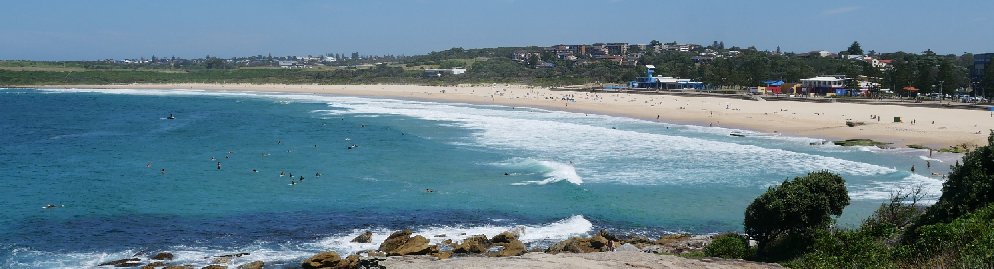
There was a time when giant Australian Army amphibious vehicles competed with surfers and swimmers to ride the big surf at Marboura Beach. In the 1950s and early 1960s, large army
amphibious vehicles were at common sight at Maroubra.
Amphibious Vehicles
Growing up in Maroubra in the early 1960s, I spent much of my spare time on Maroubra Beach. As one of the many young teenagers of the time, a favourite pastime was to run alongside
Army amphibious vehicles as they wheeled across the sand and into the surf. It was a lark to then swim alongside the large craft, bantering with their crews.
I remember once, after we had seen the 1962 epic historical drama film Mutiny on the Bounty starring Marlon Brando, Trevor Howard, and Richard Harris at a local
cinema, we taunted the young army trainees by sarcastically pleading for their fair treatment by "bully" Captain Bligh. A crusty old sergeant stuck his head over the aluminium
side of the wallowing vehicle and yelled at us "Piss off you kids, or I call the police. A group of men in gray dustcoats who had been supervising operations in the sandhills
behind the beach appeared and a merry chase was on between fleet-footed Maroubra lads and the middle-aged men in graycoats. They were not police, they were not Council
rangers - they seemed to think they had some sort of authority on the beach that day.
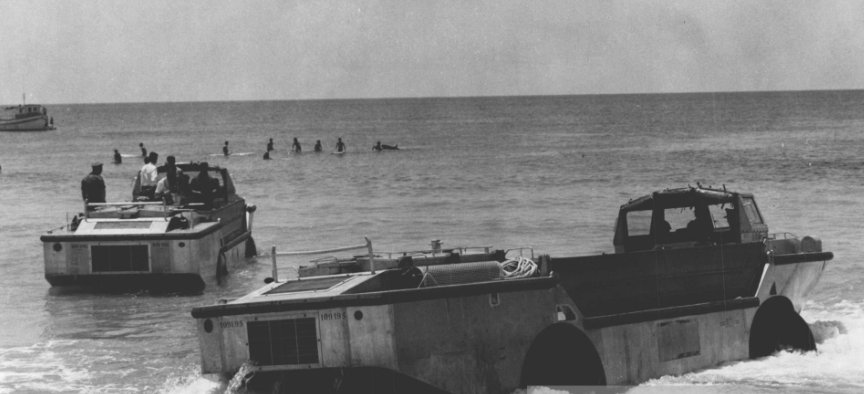
The LARC5s sharing the ocean with surfers
Modern ideas about "Occupational Health and Safety", and unfettered access to public recreation
areas seemed to be unacknowledged. However, looking back, I think we had every right to be there, and the army should have used designated safe areas.
Recounting these experiences over the years to others has simply resulted in disbelief. People do not seem to believe that Maroubra Beach could have been used for army exercises. So,
I recently decided to delve into some history collections to see what I could find.
DUKW's in 1954
I came across one clipping from 1954 which said that nearly 100 servicemen from the New South Wales north-coast were training in the use of the DUKW vehicles at Maroubra Beach.
It began with calm-water instruction in Botany Bay. The men then learned to handle the vehicles in a swiftly running stream at Wiseman's Ferry, on the Hawkesbury River.
The final rough weather training was done in the surf at Maroubra Beach.
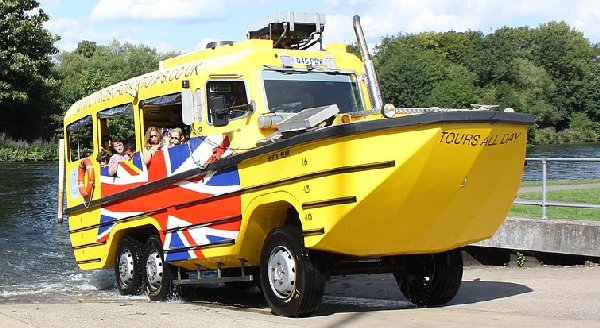
The DUKW (pronounced "Duck"), is a six-wheel-drive amphibious modification of the two and a half ton CCKW trucks used by the U.S. military during World War II and the Korean War. A
number were acquired by the Australian Army. They were used to transport troops and equipment to beachfront battlefields, but now largely obsolete, many have been repurposed
as tourist transport vehicles and can often be seen around the world at tourist hotspots offering amphibious excursions for a fee.
ex-military DUKW vehicle in UK used at tourist transport
Buffalo Tracked Vehicles
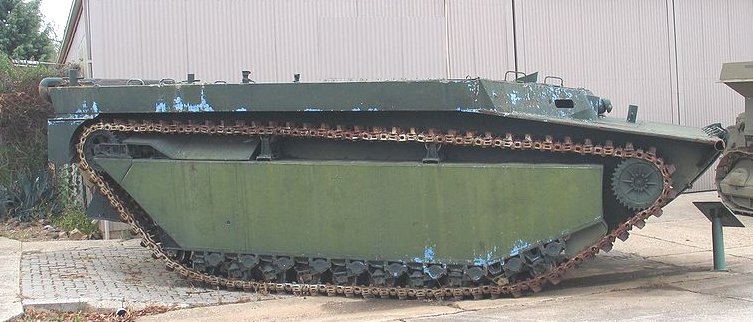
Another report showed that in 1963, the Army was training troops of the 42 Amphibious Platoon Royal Australian Army Service Corps (RAASC) how to use of vehicles called "Buffaloes",
or "Landing Vehicles Tracked" at Maroubra Beach, over a five week course. These vehicles had, as the name implied, continuous moving tracks and looked more like an armoured vehicle.
Buffalo tracked amphibious vehicle
LARC5 Craft
But neither the DUKW or "Buffalo" amphibious vehicles looked much like the things I remembered from my youth at Maroubra they were big, four-wheeled U-shaped aluminium behemoths. Finding
the right vehicle meant a wander around the Army's museum at Pukapunyal near Wagga Wagga where I came across an image of what I was looking for. The vehicles were actually called LARC5
which stood for the Light Amphibious Resupply Cargo. The numeral five just meant it could carry 5 tons of cargo. The LARC5 has been the mainstay of amphibious capability of the Australian
Army and Navy (as well as for the Australian National Antarctic Research Expedition) since the 1960s. On several occasions, I watched the LARC5-s move as small convoys along Anzac Parade on their way back
to their barracks from Maroubra Beach.
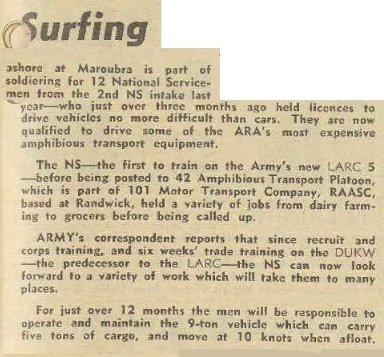
In July 1966 the Australian Army magazine reported on 12 National Service soldiers were being trained at Maroubra Beach to operate LARC5 amphibious transport vehicles,
before being posted to 42 Amphibious Transport Platoon, which was part of 101 Motor Transport Company, RAASC, based at Randwick barracks.
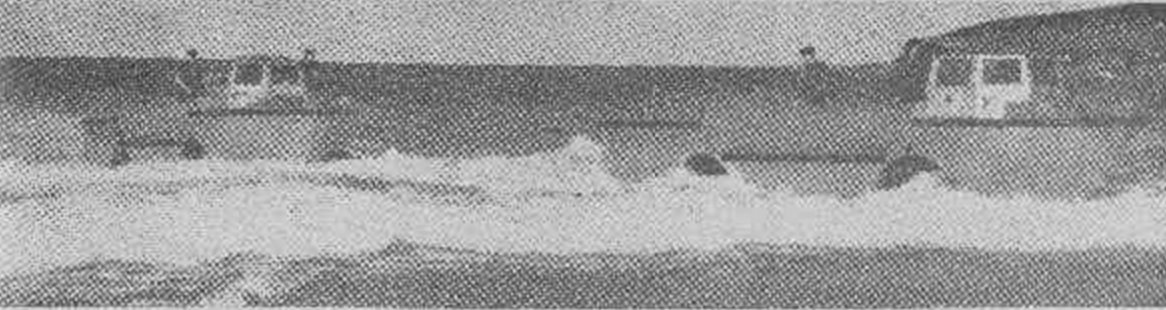
This would prepare them for just over 12 months of being responsible for operating and maintaining the 9-ton vehicles. A grainy newspaper photograph accompanying the story
showed two LARC5 vehicles pushing through the surf at Maroubra.
In the end, what stays with me is not just the machinery but the sheer improbability of it all - a suburban beach doubling as a military training ground, teenagers racing alongside nine-ton
amphibious craft, and the easy mingling of army discipline with the carefree spirit of Maroubra.
Gary Booker
References
'Army flood corps ready for n. coast', The Manning River Times and Advocate for the Northern Coast Districts of New South Wales (Taree, NSW) Fri 27 Aug 1954, p. 1
'Gad, Buffales Sir', Australian Army, Thursday April 1, 1963, p. 1
'Surfing', Australian Army, Thu, 21 July, 1966, p. 5