\ Coogee Media - Earl Grant

Coogee Media


HOME
COOGEE
HISTORY
COOGEE
STORIES
COOGEE &
BEYOND
COOGEE
BLOG
COLLECT
& CREATE
COOGEE
PEOPLE
ARCHIVES

Earl Grant: the Forgotten "King" of Sydney's Nightclubs


A regular visitor to Coogee Beach in the mid-1960s was the American musician Earl Grant. Grant was an accomplished jazz musician who sang, and played a number of instruments including the piano, trumpet and drums, but above all others, he was a virtuoso of the electric organ. Although the elaborate and multilayered organ renditions are not fashionable these days, in the late 1950s and 1960s they were a standard of night club performances and audiences were wowed by Grant's stellar performances. For a while in the 1960s he was a favourite Sydney performer.
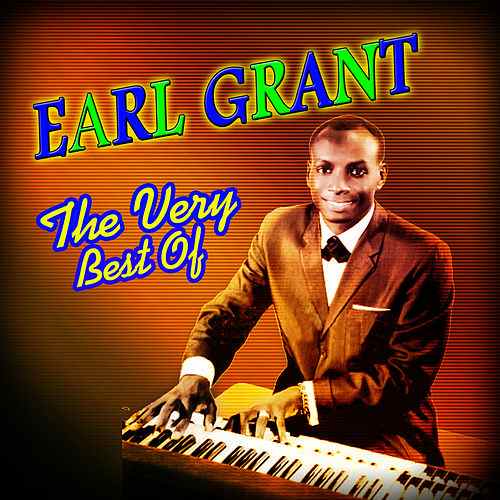
Earl Gtrant

Grant was born January 20, 1931 in Oklahoma City, Oklahoma, the son of a Baptist minister and one of twelve children. Grant began his music career at the age of four when he played the piano and organ at his father's services in his hometown of Idabel, Oklahoma. He then attended four music schools in Oklahoma and would eventually become a music teacher himself after graduating from the University of Southern California. He said that when he first started teaching at high schools, he was perturbed to find he was allocated to teaching chemistry, which he knew nothing of, but happily after about six months, he was assigned to teaching music which he did for about two years.

Performance Career
Grant's performance career began soon after he joined the United States Army in 1953. He was stationed at Fort Bliss near El Paso, Texas and during his time there, played in local clubs to make extra money. Gaining popularity while in the Army, by the time he was discharged in 1957, Grant was able to become a full-time performer.

He first gained national recognition at the Pigalee Club in Los Angeles, where the management was forced to expand club facilities three times to accommodate his fans.

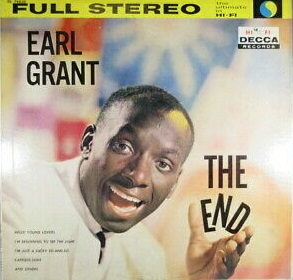
In 1957 Grant signed with Decca Records in Los Angeles. With Decca he produced his first single, The End, which was released in 1958. The End reached number seven on the Billboard Top 100 Chart. Grant's most popular song, Ebb Tide, was released in 1961 and gained gold-disc status as a single after it sold over one million copies.

Grant recorded another five singles that would make the Billboard Top 100 Chart. He toured Japan, Mexico, Australia, Canada, and Europe as well as across the United States. Grant recorded thirty albums with Decca Records and all up had 50 record albums to his name. He also made a few appearances on film and television and sang the theme song for the 1959 film Tender is the Night.

Sydney Nightclub Star
Grant first appeared in Australia at the Embers nightclub in Melbourne in August 1960. He then regularly played on the Sydney night club scene, on and off, from at least as early as March 1963 and as late at 1970, as far as I could discern, but it could have been a longer period - including at the Chequers Club in Goulburn Street Sydney, the Silver Spade nightclub at the Chevron Hotel in Potts Point, Sydney and at the Stadium at Rushcutters Bay. He seems to have made his tour to Sydney an annual event. In 1967 a review in The Australian Jewish Times noted that his brother William "Bill" (b 2 Feb. 1939) accompanied him and acted as his musical director and drummer. According to passenger arrival cards at the National Archives of Australia William Grant, who described himself variously as a "musician" or "businessman", usually accompanied his brother.

According to the Australian Concert Tours 1950-1979 database, Grant had the following nightclub residencies

  • Aug - Sept 1960 - The Embers, Melbourne
  • Mar - April 1963 Andre's Gold Key Club (Sydney)
  • Feb - Mar 1964 Sydney
  • Jan - March 1965 - Chequers Sydney, Menzies Hotel, Melbourne
  • Jan - Feb 1966 - Chequers Sydney, Canberra Theatre (Feb 19)
  • March - April 1967 - Chequers, Sydney
  • April 1968 - Chequers, Sydney
  • May - June 1969 - Chevron Hotel, Kings Cross (Sydney)

    In 1967 the Australian Bandstand host, Brian Henderson, described Grant as being the king of Sydney's nightclub scene, a most electrifying entertainer, an act to be seen live so that one could appreciate his great talent. On the show he played a recording of Grant playing the organ at a Sydney recital; it was available for view on YouTube for a long time, but unfortunately has been removed from the site.

    Grant and his brother often stayed at the Sebel Townhouse hotel at Elizabeth Bay near Sydney's bohemian Kings Cross when they were in Sydney. The Sebel Townhouse was opened in 1963 and gained an international reputation for its intimacy and attention to the needs of entertainers. It became the unofficial headquarters of visiting stars and musicans during the 1960s and 1970s.

    Civil Rights Movement
    Grant described himself as being the great-grandson of slaves and was an active member of the National Association for the Advancement of Colored People (NAACP). He was therefore a supporter of the American civil rights movement, and he told the Tribune reporter when interviewed, that he attended the 1963 March on Washington, "with everyone", presumably meaning other musicians, and then flew to Pasadena in California to attend a similar rally there the same night. He was a great believer in the value of education, because he said that it not only helped the oppressed black Americans get ahead, it also educated other Americans into the value of an equal society.

    Grant maintained his civil rights activist credentials while in Sydney by giving at least one free recital at a concert for the Foundation for Aboriginal Affairs, at their premises at 810-812 George Street, Sydney. The Foundation, otherwise known as the "Foundo", was established in the early 1960s by Aboriginal civil rights leaders including Charles Perkins and Bill Geddes. The editor of their modest roneoed newsletter noted:

    We were greatly privilged to have had Earl Grant as guest artist on Sunday 13th [January 1966]. As was expected, Aboriginal people came in their hundreds , and a great percentage could not get within hearing distance. Those organising these functions hope a larger hall at the Centre in the very near future.
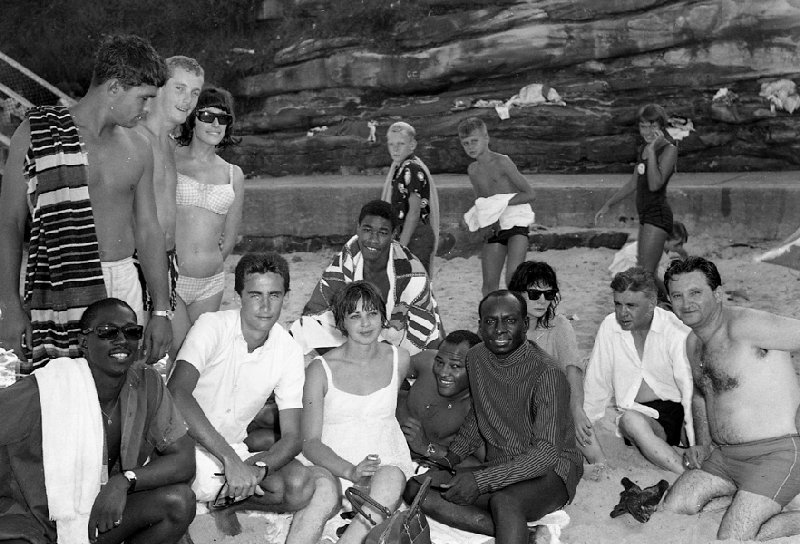
    Earl Grant and his colleagues at Coogee Beach in 1965
    Earl Grant and his colleagues at Coogee Beach in 1965

    Sharp Dresser
    Grant was a very snappy dresser. He performed in well-tailored suits, and his feet pressing the organ's pedals could be seen in silk socks and shiny black patent shoes. In a US television interview he proudly showed off a fine suit and ensemble he said he had made in Sydney by "an Italian tailor". When Grant arrived in Sydney in February 1964, the Canberra Times reported that he came with a huge wardrobe of suits, shoes, shirts and ties, and a valet to look after them. It also reported that he kept fit by walking from Rushcutters Bay to Bondi Beach and back, as well as swimming at Coogee Beach.

    Accidental Death
    Tragically, Earl Grant died at the age of only 39 on June 10, 1970 in a car crash. He and a companion, his 17 year old cousin, Roosevelt Woods (actually Grant's cousin's son), were driving through the New Mexico desert 14 miles west of Lordsburg near the Arizona border on Interstate 10, only 166 miles short of his destination. They were on their way to perform at the La Fiesta nightclub in Juarez, Mexico. The Club had many famous stars appear there including Frank Sinatra, Bobby Rydell, the Kingston Trio and Nat "King" Cole. Grant's Rolls-Royce Silver Shadow swerved on a curve and rolled off the road. Grant was pinned inside the overturned wreck and Woods was thrown from the car. Both died of head and chest injuries.

    Ironically, it was claimed by his El Paso agent that Grant was carrying a return air ticket to El Paso, and only changed his mind at the last moment and decided to drive. In May 1971 his mother Catherine Wharry Cooper (1913-1993) sued both Rolls Royce and Bristol Mayers, the maker of a no-doze drug marketed to help drivers stay away on long drives. It is difficult to determin what the oucome of the legal action was, but it does suggest that she was concerned that Grant had fallen asleep at the wheel while driving.

    Earl Grant is buried at Forest Lawn Memorial Park (Hollywood Hills) Lincoln Terrace, Lot 4236, Space 4 A.

    Had it not been for his untimely death at a relatively early age, Earl Grant who was still in his musical prime would probably have made his annual migration to Sydney long after 1970, to the delight of audiences.
    Earl Gtrant

    References

  • Fitzgerald, N. (2018, October 28) Earl Grant (1931-1970). Retrieved from https://www.blackpast.org/african-american-history/grant-earl-1931-1970
  • Fitzgerald, Natalie; 'Eart Grant (1931-1970)', Black Past, https://www.blackpast.org/african-american-history/grant-earl-1931-1970 (accessed 23 July 2019)
  • 'Earl Grant', The Australian Jewish Times (Sydney) Thu 30 Mar 1967, Page 2
  • Kevans, Denis, 'You can't hold a man back 'cause his skin is black', Tribune (Sydney) Wednesday 4 Mar 1964 Page 7
  • 'Musician Earl Grant Killed', The Canberra Times, Fri 12 Jun 1970 Page 5
  • The Canberra Times 22 Feb 1964 Page 9
  • 'Earl Grant, a Popular Organist And Record Star, Dies in Crash', New York Times June 11, 1970, Page 45
  • De Looper, Michael, AUSTRALIAN CONCERT TOURS 1950-1979, Australian Concerts
  • 'Sunday Nights Concerts', IRABINA, Foundation for Aboriginal Affairs, 810-812 George Street, Sydney, Vol.2, No. 2, February 1966
  • 'Earl Grant killed in auto crash', Baltimore Afro-American, 13 June, 1970, p.1
  • Desert Sun (Palm Springs, USA), Vol. 43, No 264, 11 June 1970, p.3


    The 1968 Earl Grant Television Interview

    Copyright © Coogee Media All rights reserved


    | CONTACT US | ABOUT US |